
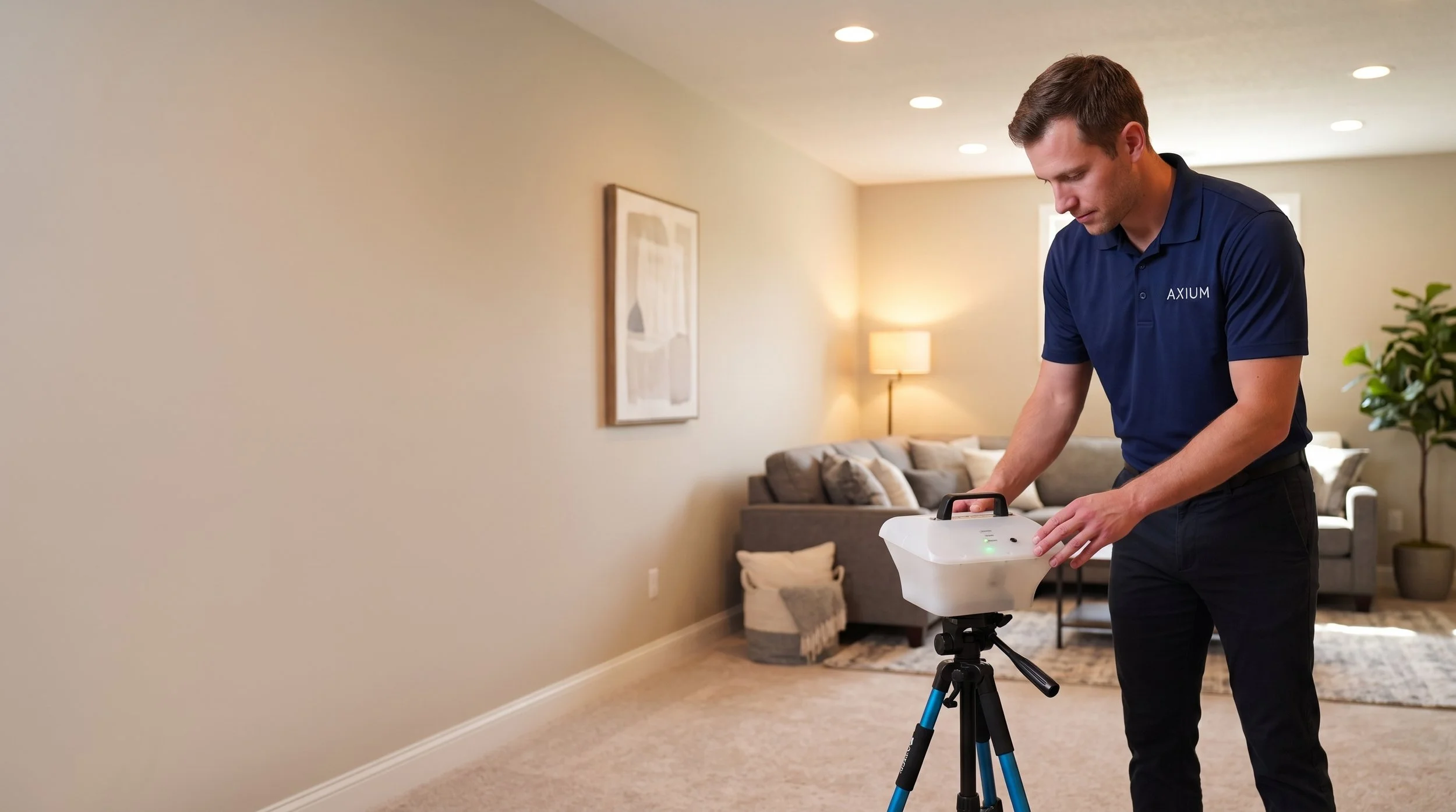
Radon testing for Denver homebuyers
Radon is invisible and odorless. Testing is the only way to know if a home has a problem and if mitigation is needed.
When to get radon testing
You should test for radon if:

The home has never been tested

You’re buying or selling the home

You’re planning or have finished renovations

It’s been two years since your last radon test
Test for radon before you close
You can either hire an Axium radon tester or purchase a radon test kit and do it yourself. The Environmental Protection Agency (EPA) recommends hiring a professional tester if you are buying or selling a home.
Professional Testing
Ideal for homebuyers and homesellers

Results accepted for real estate transactions

Conducted by state-licensed inspectors

Next-day scheduling available

Results as soon as 48 hours
DIY Testing
Ideal for homeowners not in a transaction

Affordable screening from home

Lab analysis paid by Axium; no out-of-pocket costs

Kit certified by NRPP

Results in 10 to 14 days
Understand your results
The radon level in the home will determine the recommended next steps.
Higher than 4 pCi/L

Contact an Axium radon mitigation specialist to install a radon reduction system.
Retest in a few months to make sure radon levels are declining.
Next Steps: radon mitigation
Between 2 and 4 pCi/L
Consider installing a radon reduction system.
Retest in a few months for changes in radon levels.
Next Steps: explore radon reduction
Lower than 2 pCi/L
Consider retesting if you begin living on a lower level (e.g., you turn your basement into a home office).
Next Steps: no action needed
Radon testing vs radon mitigation
Radon testing tells you if you have a problem. Mitigation fixes it. Here’s when to get each service and what they include.
PHASE 1 · TESTING
Test your home
A state-licensed radon professional places a radon monitor in the lowest livable level of your home for 48 hours. Results are available the same day.
PHASE 2 · RESULTS
Understand your results
Your result is measured in pCi/L. The EPA recommends action at 2.0 pCi/L or higher. Colorado’s average is 6.3 pCi/L, well above that threshold.
PHASE 3 · MITIGATIONS
Fix it with Axium
If the levels are high, Axium’s state-licensed specialists can install a mitigation system to reduce your radon by up to 99%.
REVIEWS
Trusted by 10,000+ Denver real estate agents

“Quick to return my call and schedule my requests for inspection and Radon testing. The reports were reviewed within 24–48 hours! Easy to work with and highly recommend!”
Sonya R.
Homebuyer
FAQ
Frequently Asked Questions
-
Professional radon testing in Denver typically costs around $100 when bundled with a home inspection. DIY test kits are cheaper. Axium provides test kits at no lab cost to homebuyers and homeowners.
-
A professional radon test takes 48 hours, and results are available the same day. DIY test kits take 10 to 14 days for testing, shipping, and lab processing.
-
In Colorado, the buyer typically orders and pays for radon testing during the inspection period. There is no legal requirement for sellers to test in advance, though some do to get ahead of potential issues.
-
The EPA recommends taking action at 2.0 pCi/L or higher. Colorado's average indoor radon level is approximately 6.3 pCi/L. The entire state is classified as an EPA Zone 1, the highest risk designation for radon exposure.
-
Radon testing is not legally required to buy a home in Colorado. However, it is strongly recommended. Most Colorado real estate agents and lenders advise buyers to include radon testing as part of the standard home inspection.
-
If radon comes back at or above 4.0 pCi/L, the buyer can negotiate with the seller to cover mitigation costs before closing. Mitigation can be fast. Planning and installation can happen in less than a week.
Reduce your radon and breathe easy again.
We're here when you need us, 7 days a week.
*Restrictions apply. See our Lifetime and Workmanship Guarantees.